Damien Pantalos

Energy engineer
Brussels, Belgium

Open CV HomeBackgroundPublicationsToolsPhotography

Publications

Theses, reports and ongoing work across energy storage, sustainable systems and data science. Read the abstracts to explore each study.

All projects

1-3 / 6
Energy storage

Multi-market BESS optimisation

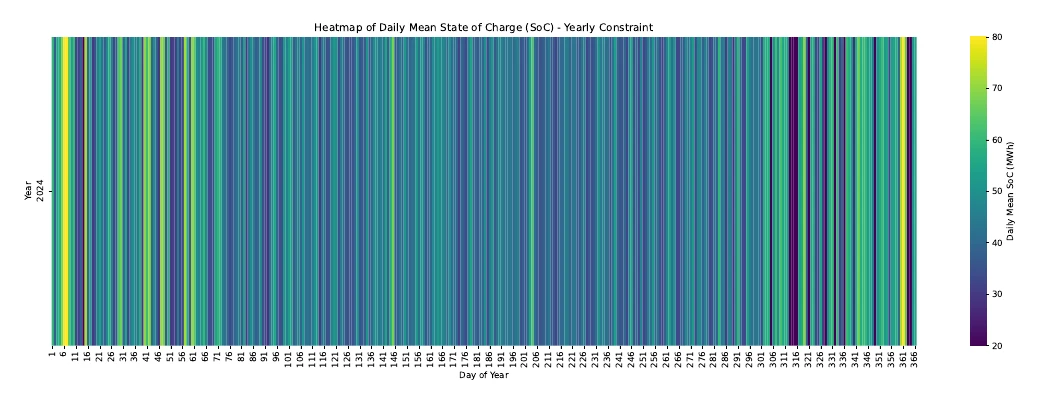
Daily mean battery state of charge across 2024 under yearly constraints, shown in the thesis heatmap.
Battery operation over a yearThesis, Figure A.2

Modelled battery storage participation across arbitrage and ancillary service markets using Pyomo and mixed-integer linear programming.

Data & energy

Heating & cooling optimisation

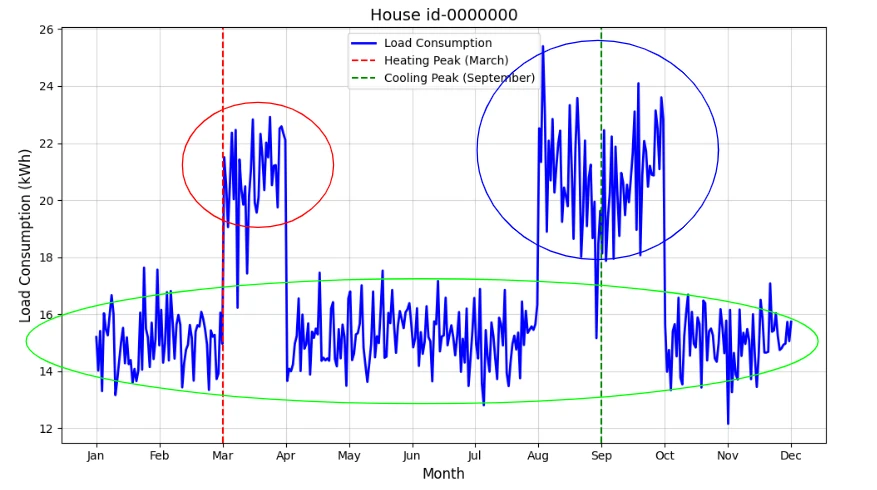
Household electricity load across the year, with heating and cooling peaks identified.
Separating heating and cooling demandProject report, Figure 4.2

Combined load disaggregation, historical consumption and weather data to assess residential heat pump sizing.

Renewable systems

Net-zero communities

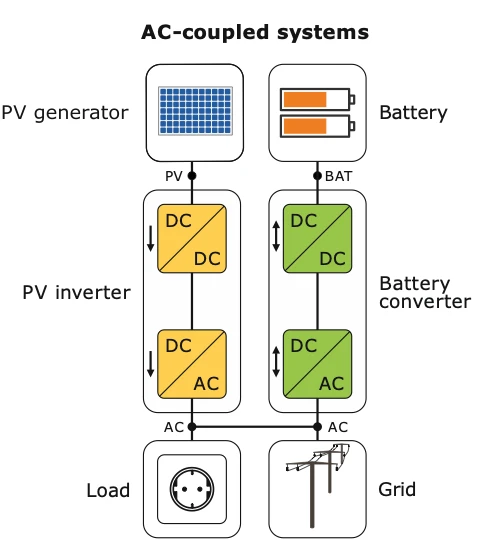
AC-coupled energy system connecting a PV generator, battery, load and electricity grid.
PV, storage and the electricity gridDissertation, Figure 3.2

Compared solar PV, wind and battery storage scenarios using energy, economic and environmental criteria.

Circular economy

Smart irrigation system

Building a closed-loop irrigation system with water filtration, IoT sensing and live monitoring of plant performance.

Machine learning

Electricity demand forecasting

Forecast electricity demand in Spain using a neural network, historical consumption and weather data.

Future systems

Underground Horizons

Designed an underground vertical farming concept for Mars, combining hydroponics, solar power and natural radiation shielding.

Use the arrows or swipe to explore. Select a publication to read its abstract.

Energy storage · 2024 - 2025

Multi-Market Optimisation for Energy Storage (Master Thesis)

UPC Barcelona & Elia Group - Master Thesis (Grade: 9/10)

Abstract

The accelerating deployment of intermittent renewable energy sources such as solar and wind has introduced significant challenges in maintaining grid stability and efficient electricity market operations. One of the key problems is the temporal misalignment between electricity generation and consumption, which creates both technical imbalances in the power system and economic inefficiencies in electricity markets. Battery Energy Storage Systems (BESS) offer a promising solution by providing flexibility, however, their profitability remains uncertain due to volatile market conditions, complex participation rules, and degradation costs. Furthermore, most existing approaches focus on single-market participation, overlooking the full economic potential of BESS in multi-market settings.

This thesis addresses that gap by developing a multi-market optimization model tailored for BESS operating in Belgium, where storage operators can simultaneously access arbitrage (Day-Ahead and Imbalance) and ancillary service markets (FCR, aFRR and Imbalance). The proposed model is implemented in Pyomo using mixed-integer linear programming and captures operational constraints, efficiency losses, and degradation effects under multiple cycling scenarios. It operates at 15-minute resolution and dynamically allocates capacity across markets to maximize total revenue.

Market data from Elia covering the year 2024 was used to simulate real-world operation, while data after Belgium’s integration into the PICASSO platform was excluded due to fundamental changes in aFRR pricing and structure. The analysis reveals that a coordinated multi-market strategy improves profitability over isolated market participation, with ancillary services providing stable revenue and arbitrage exploiting price volatility. Seasonal and temporal revenue patterns were analyzed, showing clear complementarities between markets.

The analysis shows that strategic market participation can improve BESS profitability, yet outcomes are highly dependent on market volatility and policy developments. The thesis concludes by highlighting model limitations and recommending future work on integrating price forecasting and reinforcement learning for adaptive bidding strategies.

Data & energy · 10/2024 - 01/2025

Data-Driven Optimisation of Heating/Cooling System

UPC Barcelona - Data-Driven Challenges for Energy Engineers

Abstract

Developed a comprehensive methodology to optimize heat pump sizing for UK residential buildings using load disaggregation techniques on historical energy consumption data coupled with regional weather information.

Key methodology: Implemented Non-Intrusive Load Monitoring (NILM) using NILMTK toolkit and deep learning approaches to disaggregate heating/cooling loads from total household consumption. Integrated weather data correlation to identify temperature-dependent patterns and calculate optimal heat pump capacities for both electrified and non-electrified homes.

Renewable systems · 10/2022 - 06/2023

Modelling & Optimisation for Net Zero Communities (Bachelor Thesis)

De Montfort University - Final Year Project

Abstract

Developed a comprehensive multi-criteria optimisation framework for designing net-zero energy communities. The model integrates real-time meteorological data via APIs, energy generation/consumption profiles, and techno-economic parameters to evaluate renewable energy configurations.

Methodology: Analysed multiple scenarios combining solar PV, wind turbines, and battery storage systems. Optimization criteria included energy self-sufficiency, levelized cost of energy (LCOE), net present value (NPV), and carbon emission reductions. The tool helps communities identify the optimal balance between investment costs and environmental benefits.

Circular economy · 05/2026 - Present

Circular Economy Smart Irrigation System

Personal Project - IoT, Circular Economy & Agri-Tech

Abstract

Building a closed-loop smart irrigation system based on circular economy principles. A fresh water tank supplies nutrient-rich solution to the plants via a pump; used water drains to a dirty tank, passes through a coarse mesh filter (removes roots and large debris) then a fine filter (activated carbon + UV), and returns clean to the fresh tank - nothing is wasted or discharged.

Plant performance monitoring: IoT sensors (pH, EC, temperature, humidity, light) publish readings every 5 minutes via MQTT to an InfluxDB server. A Grafana dashboard and mobile app provide live visualisations of tank levels, flow rates, and growth KPIs. Weekly measurements (plant height, leaf area, chlorophyll via SPAD meter) track crop performance over time.

Machine learning · 10/2024 - 01/2025

Predicting Electricity Consumption Using Neural Networks

UPC Barcelona - AI in the Energy Sector

Abstract

Developed a Multilayer Perceptron (MLP) neural network to forecast electricity demand in Spain's peninsular region for the upcoming 2 hours, segmented into 30-minute intervals. The model was trained on real-world consumption data from February to August 2024.

Key methodology: Implemented a sliding window approach with a 25-hour lookback period (n=50) to capture temporal patterns. Integrated exogenous variables including temperature and wind speed to enhance predictive capabilities. The network architecture featured 3 hidden layers (128→64→32 neurons) with batch normalization and dropout regularization (0.2) to prevent overfitting.

Future systems · 10/2024 - 01/2025

Moonshot Project: Underground Horizons

UPC Barcelona - Prototyping & Future Thinking

Abstract

Designed an innovative underground vertical farming system for Mars that addresses the unique challenges of Martian agriculture: extreme radiation, temperature fluctuations, and limited water resources. The system leverages underground lava tubes for natural radiation shielding and thermal stability.

Key innovations: Integrated precision farming technology with LED grow lights optimized for plant photosynthesis, closed-loop hydroponic systems for water recycling, and CO₂ extraction from the Martian atmosphere. Surface-mounted PV arrays provide sustainable power for the entire operation.